Japandi Interior Design: The Complete Guide to Japanese-Scandinavian Fusion
Japandi interior design takes two philosophies that share surprising DNA -- Japanese minimalism and Scandinavian warmth -- and weaves them into spaces that feel both refined and deeply livable. If you've been drawn to clean lines but turned off by cold, sterile rooms, this is probably what you've been looking for.
What Is Japandi Style?
Japandi is a hybrid design aesthetic that blends the Japanese concept of wabi-sabi (finding beauty in imperfection and simplicity) with the Scandinavian principle of hygge (creating warmth and coziness in everyday life). The result sits somewhere between a Kyoto tea house and a Copenhagen apartment -- pared back but never bare, functional but never clinical.
Both traditions have centuries of design philosophy behind them, and their overlap is remarkably natural:
- Shared love of minimalism -- neither tradition tolerates clutter
- Respect for craftsmanship -- handmade pieces over mass-produced filler
- Nature as a starting point -- organic materials, natural light, muted earth tones
- Intentional living -- every object in a room should earn its place
Where they diverge is what makes Japandi interesting. Scandinavian design leans playful and bright. Japanese design leans restrained and contemplative. The tension between those instincts is where the magic happens.
Core Principles: Where Wabi-Sabi Meets Hygge
To get Japandi right, you need to understand the two philosophies driving it -- not as abstract concepts, but as practical design filters.
Wabi-sabi accepts imperfection as beauty. A hand-thrown ceramic bowl with an uneven glaze. A wooden surface that shows its grain and age. A linen curtain that wrinkles naturally. These aren't flaws -- they're proof of authenticity. This principle pushes you away from anything too polished or too "perfect."
Hygge insists that a home should feel like a warm embrace. Soft textiles, ambient lighting, comfortable seating, spaces designed for unwinding. Hygge is why Scandinavian interiors never feel austere despite their minimalism -- there's always a wool throw, a candle, a reading nook inviting you to stay.
When you layer these together, you get a set of working principles:
- Edit ruthlessly, but keep what brings comfort. Remove the unnecessary, but don't sacrifice coziness for the sake of minimalism.
- Choose quality over quantity. One beautifully crafted side table beats three forgettable ones.
- Embrace the handmade. Machine-perfect surfaces feel wrong in Japandi spaces. Look for artisan ceramics, hand-woven textiles, and naturally finished wood.
- Let negative space breathe. Empty wall space and uncluttered surfaces aren't "unfinished" -- they're intentional.
- Balance dark and light. Japanese design often uses deeper tones (charcoal, indigo, walnut) while Scandinavian design gravitates toward pale wood and white. Japandi lives in the conversation between both.
The Japandi Color Palette
Color is where many people get Japandi wrong. It isn't all-white Scandinavian, and it isn't the dark drama of a traditional Japanese interior. The palette sits in a warm, earthy middle ground.
Foundation colors:
- Warm whites and creams -- not stark or blue-white, think plaster, rice paper, oat milk
- Soft greys -- warm-toned, like river stone or weathered concrete
- Beige and sand -- the backbone of most Japandi rooms
Grounding tones:
- Charcoal and soft black -- used sparingly for contrast, never as a dominant wall color
- Warm brown -- walnut, chestnut, dark oak
- Terracotta and rust -- small doses in ceramics or textiles
Accent possibilities:
- Sage green -- the most common Japandi accent, bridging nature into the room
- Muted indigo -- a nod to traditional Japanese dyeing techniques
- Dusty rose -- subtle warmth without sweetness
The rule of thumb: if a color could exist in nature without human intervention, it probably works. Avoid anything neon, highly saturated, or synthetic-feeling. The palette should feel like a walk through a forest at dusk -- muted, layered, quietly complex. This same two-tone restraint, pale cabinetry against a single grounding wood, also anchors the modern kitchen design ideas we apply when a Japandi palette moves into the cooking space.
Materials and Textures That Define the Look
Japandi interiors are material-driven. Get the surfaces and textures right, and the style almost assembles itself.
Wood is the single most important material. Light-toned woods like ash, birch, and pale oak bring the Scandinavian side. Darker woods like walnut and teak bring the Japanese influence. Many Japandi rooms use both -- a light oak floor paired with a walnut dining table, for example. The finish matters: matte or natural oil, never high-gloss lacquer.
Stone and concrete appear in countertops, accent walls, and accessories. Think honed marble, limestone, or raw concrete -- matte finishes that show texture rather than hiding it. When choosing between natural stones, our travertine vs marble comparison helps narrow the decision.
Ceramics are essential. Handmade pottery with visible throwing marks, uneven glazes, and organic shapes. These pieces bring wabi-sabi into the room more effectively than almost anything else.
Natural textiles layer warmth into the space:
- Linen -- for curtains, cushion covers, bedding. Its natural wrinkle is a feature, not a bug.
- Cotton -- organic, undyed or naturally dyed
- Wool -- chunky knits for throws, flat weaves for rugs
- Jute and rattan -- baskets, pendant lights, chair seats
Paper and bamboo round out the Japanese side. Shoji-style screens, rice paper pendant lamps, bamboo blinds -- these add lightness and translucency that keeps rooms from feeling heavy.
Avoid plastics, chrome, high-gloss finishes, synthetic fabrics, or anything that reads as industrial rather than organic. For a broader look at eco-conscious options, see our guide to sustainable building materials.
Furniture and Decor Rules
Japandi furniture follows a clear logic: low profiles, clean lines, visible joinery, and natural materials. Here's how to apply it.
Silhouettes should be low and grounded. You don't need full floor-sitting, but opt for sofas with lower seat heights, platform beds without tall headboards, and coffee tables closer to the ground. This creates a sense of calm and openness.
Lines should be clean but not sharp. Look for pieces with gentle curves and rounded corners. A dining chair with a subtly curved backrest. A side table with softly radiused edges. Pure geometric rigidity feels too cold for this style.
Visible construction is a feature. Exposed wood joinery, visible dowels, hand-stitched upholstery seams -- these details signal craftsmanship and align with both design traditions.
Decor should be minimal and meaningful:
- One statement vase with a single dried branch or a few stems, rather than a full bouquet
- Handmade ceramics grouped in odd numbers (three small bowls, one large plate)
- A single piece of artwork per wall, not a gallery wall
- Functional objects as decoration -- a beautiful kettle on the counter, a wooden tray holding daily essentials
What to avoid:
- Overly ornate or decorative furniture
- Matching furniture sets (mix wood tones and makers instead)
- Excessive throw pillows or blanket layering
- Decorative objects with no function or personal meaning
- Anything that feels mass-produced or trend-chasing
Room-by-Room Application
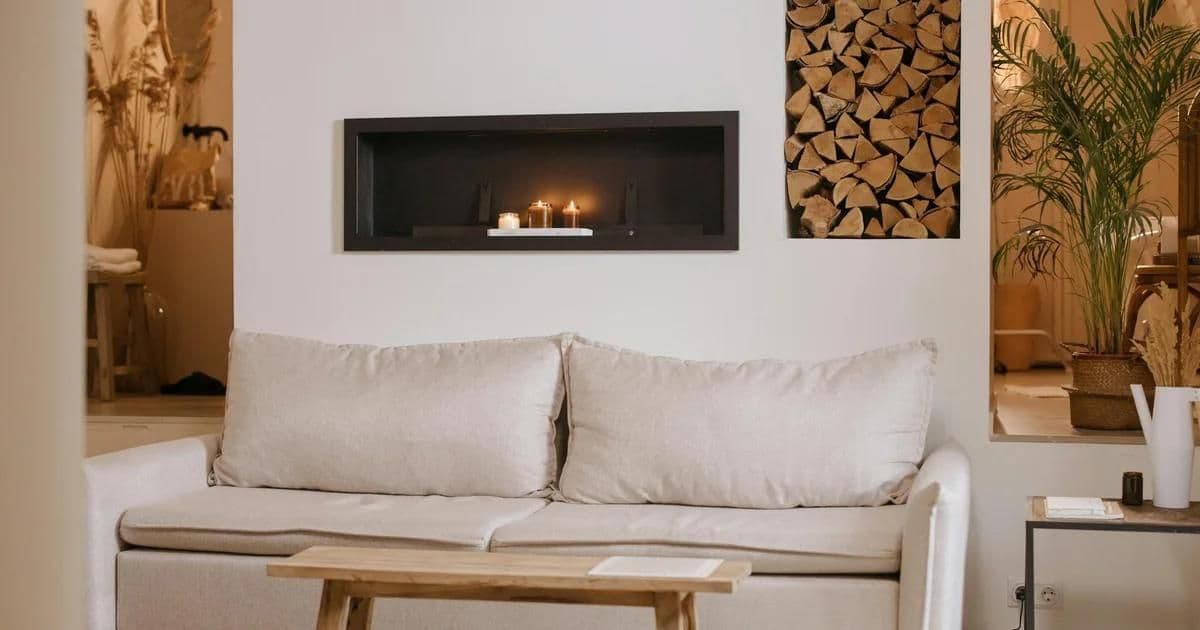
Living room. A low-profile sofa in neutral linen or bouclé, a solid wood coffee table in walnut or oak, and a flat-weave wool rug in cream or grey. One or two ceramic pieces on a shelf. A paper or linen pendant overhead. Leave breathing room between furniture -- the goal is a space open enough to think in but warm enough to fall asleep in.
Bedroom. A low platform bed anchors the room. Natural linen bedding in white, oatmeal, or soft grey with a single wool throw at the foot. Minimal nightstands -- a wooden stool or floating shelf. A table lamp with a ceramic or paper shade instead of overhead lighting.
Kitchen. Open shelving in natural wood replaces upper cabinets. Countertops in honed stone or concrete. Matte black or brushed brass hardware. Keep counters clear except for a few functional objects: a wooden cutting board, a ceramic utensil crock, a kettle.
Bathroom. Think spa, not showroom. The latest luxury bathroom design trends align closely with Japandi principles. Natural stone tiles, a wooden vanity, organic cotton towels in cream or grey, matte black fixtures. Hide storage behind clean cabinet fronts -- nothing sits out except what you use daily.
Home office. A solid wood desk, a comfortable non-corporate chair, and open shelving for books. Good natural light plus a warm task lamp. Remove visual noise through cable management, closed storage, and a clear desktop.
Frequently Asked Questions
Is Japandi style expensive to achieve? Not necessarily. You might spend more per item but buy far less overall. If you're considering working with an interior designer, they can help you prioritize the right pieces. Thrift stores and vintage markets are great sources for handmade ceramics and solid wood furniture that fit perfectly. The most expensive part is restraint: resisting the urge to fill every surface.
Can I mix Japandi with other styles? Carefully, yes. It plays well with mid-century modern and bohemian touches. It clashes with maximalism, industrial, and anything heavily ornamental. Keep the core principles -- simplicity, natural materials, intentional placement -- intact.
What's the difference between Japandi and regular minimalism? Warmth. Standard minimalism can feel cold and clinical. Japandi keeps the edited quality but insists on warmth through natural materials, soft textures, and handmade objects. It's minimalism with a soul.
How do I make a small space feel Japandi? Small spaces suit Japandi perfectly since the style already favors fewer pieces. Our guide to minimalist interior design for small apartments covers the spatial strategies in detail. Use multi-functional furniture, keep colors light, and choose one or two statement pieces rather than many small decorations. Paper screens and mirrors help create the illusion of more space.
What lighting works best for Japandi interiors? Natural light is priority number one. For artificial lighting, go warm (2700K-3000K) and favor paper lanterns, linen shades, and ceramic base lamps. Layered lighting -- ambient, task, and accent -- creates the cozy atmosphere Japandi demands.
Is Japandi a passing trend or a lasting style? Both philosophies behind it have existed for centuries. The term may be new, but the principles of simplicity, natural materials, and intentional living are timeless. Spaces built around these values age gracefully rather than feeling dated after a few seasons.
Get in Touch
Let's Bring Your Project to Life
Planning a new project? Let's realize your vision together.