Travertine vs Marble Flooring: An Architect's Honest Comparison
After specifying travertine and marble for residential and commercial projects over fifteen years, I can tell you the "which is better" question has no universal answer. Both stones have earned their place in architecture — but they solve different problems, age differently, and belong in different spaces.
What Makes Travertine and Marble Fundamentally Different?
People lump these two together as "natural stone," but they form through different geological processes, and that changes everything about how they behave underfoot.
Travertine is a sedimentary limestone deposited by mineral springs. Water dissolves calcium carbonate from bedrock, carries it to the surface, and deposits it in layers. Gas bubbles escaping during this process leave behind the characteristic porous texture — those small holes and channels on an unfilled travertine surface.
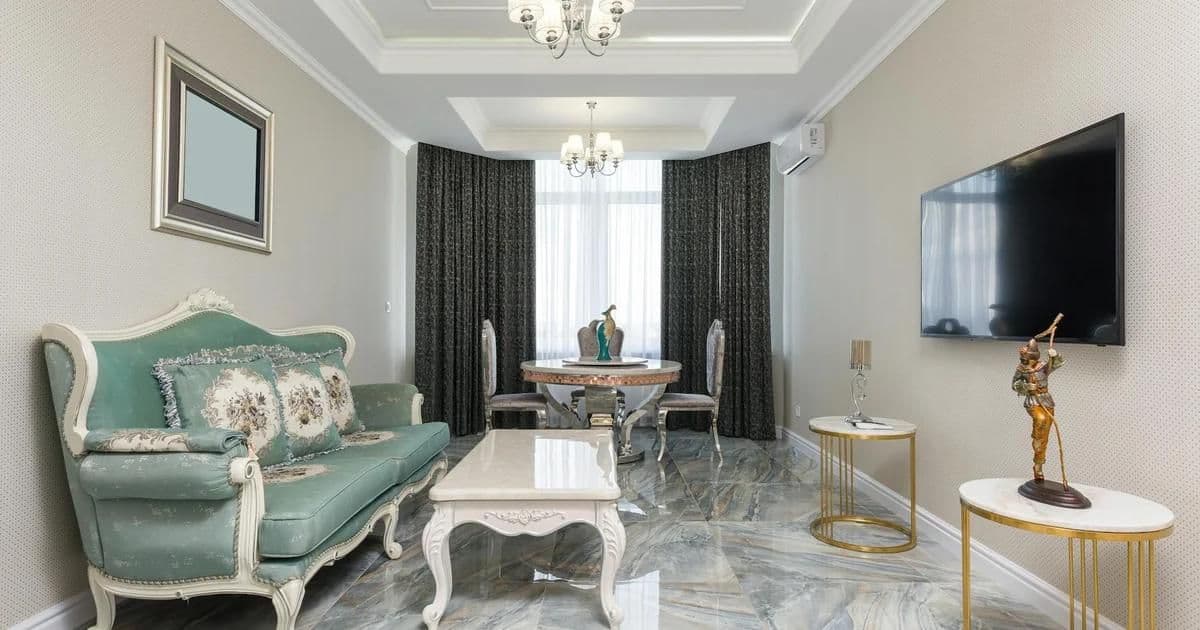
Marble starts as limestone too, but goes through metamorphism. Extreme heat and pressure recrystallize the calcite into interlocking crystals, eliminating porosity and creating the dense structure that takes a high polish and produces those famous flowing veins.
The practical difference: travertine has an open, textured character that feels organic and warm. Marble has a dense, refined character that reads as formal and luxurious. Neither is objectively superior — they signal different design intentions.
How Do They Compare in Appearance and Aesthetic?
Personal preference dominates here, but let me describe the design vocabulary each stone offers.
Travertine's aesthetic range:
- Color palette runs from ivory and cream through warm beige, walnut, gold, and silver-grey
- Surface finishes include honed, tumbled, brushed, and unfilled — each dramatically changes the character
- Patterning is subtle, with gentle tonal variation and organic texture rather than bold veining
- Overall feel is earthy, warm, Mediterranean, timeless without being ostentatious
Marble's aesthetic range:
- Color palette spans pure white (Carrara, Calacatta) through grey, green, black, pink, and deep red
- Surface finishes include polished (mirror-like), honed (matte), and leathered
- Patterning features dramatic veining that can be bold and directional or subtle and cloudy
- Overall feel is refined, striking, classical or contemporary depending on the variety
My honest take: travertine is forgiving. Its natural variation means imperfections blend in. Marble demands precision — a poorly laid marble floor with misaligned veins looks worse than a budget alternative. If you go with marble, you need a skilled installer who will dry-lay the slabs first and plan the vein flow.
How Durable Is Each Stone, and What Maintenance Do They Need?
Both stones are calcium carbonate at their core, which means both are vulnerable to acids. Lemon juice, vinegar, wine, and most cleaning products will etch the surface. That said, their durability profiles differ.
Hardness and scratch resistance:
- Marble rates 3-5 on the Mohs scale depending on variety. Polished marble shows scratches more readily than honed
- Travertine sits around 4 on the Mohs scale, but its textured surface hides minor scratches naturally
- Neither competes with granite (6-7) or porcelain for raw scratch resistance
Porosity and staining:
- Unfilled travertine is highly porous and will absorb liquids quickly if unsealed
- Filled and honed travertine performs much better but still needs sealing every 1-2 years
- Polished marble has lower porosity than travertine but is far from impervious — red wine and coffee will stain if left sitting
- Both require an impregnating sealer, reapplied on schedule
Maintenance reality:
- Travertine with a tumbled or brushed finish is the most forgiving for daily life. Scratches, minor etching, and patina all blend into the rustic character
- Polished marble is the least forgiving. Every water ring, every etched spot from a splash of citrus is visible
- Honed marble strikes a middle ground — still elegant but significantly more practical than polished
My recommendation for families, kitchens, and high-traffic areas: tumbled or honed travertine, or honed marble. Reserve polished marble for spaces where traffic is controlled and you are comfortable with patina developing over time.
What Does Each Stone Actually Cost?
What you'll pay varies with variety, origin, finish, and location. Rather than fixed figures, it helps to understand how the grades rank relative to one another.
Travertine flooring (installed), from most affordable to premium:
- Tumbled pavers (for outdoor or rustic interior) — typically the most economical option
- Standard grade (Turkish ivory/cream, filled and honed) — mid-range, the workhorse choice for most interiors
- Premium grade (silver, noce, or gold varieties, select cuts) — the upper end of travertine
Marble flooring (installed), from most affordable to premium:
- Commercial grade Carrara — the accessible entry point into marble
- Turkish white marble (Afyon Sugar, Mugla White) — a competitively positioned alternative to Italian stone
- Premium Carrara or Calacatta — a significant step up
- Exotic varieties (Calacatta Borghini, Statuario) — the most expensive marbles on the market
The hidden costs people miss:
- Sealing needs to happen at installation and every 1-2 years, and it's a recurring expense people forget to budget for
- Subfloor preparation for natural stone is more demanding than for tile or engineered flooring
- Waste factor — budget 10-15% overage for natural stone
- Replacement matching — if you crack a slab years later, matching the original batch is nearly impossible. Order extra upfront
Travertine generally delivers more area for the money, especially when sourced from Turkish quarries. Material selection is one of the biggest variables in any project budget. For a personalised, scope-based proposal, contact us.
Where Does Each Stone Perform Best?
After hundreds of installations, I have clear opinions on where each stone belongs.
Travertine excels in:
- Living rooms and great rooms — warm, inviting, hides daily wear
- Outdoor terraces and pool decks — tumbled travertine stays cool underfoot and provides natural grip
- Mediterranean modern, rustic, or transitional interiors — it sets the tone without trying too hard
- Bathrooms (honed or tumbled) — excellent with radiant heating, forgiving with water
- Entryways and mudrooms — handles foot traffic and dirt without showing every mark
Marble excels in:
- Formal foyers and lobbies — nothing announces quality like a well-laid marble floor
- Master bathrooms (honed) — the spa aesthetic explored in our luxury bathroom design trends guide is hard to replicate with other materials
- Fireplaces and feature walls — marble veining creates a focal point
- Low-traffic formal dining rooms — beautiful surface for spaces used occasionally
- Commercial reception areas — projects prestige and permanence
Where I avoid each stone:
- I rarely specify polished marble in kitchens. The etching from cooking acids drives homeowners crazy within the first year
- I avoid unfilled travertine indoors unless the client truly understands the maintenance commitment
- Neither stone belongs in garage floors or utility areas — use porcelain or concrete there
How Does Climate Affect Your Choice?
Climate is an underrated factor in this decision that many guides ignore.
Freeze-thaw cycles are travertine's weakness. Its porosity means water can enter the stone, freeze, expand, and crack from within. In cold climates, exterior travertine needs careful material selection — only dense, low-porosity grades — and impeccable drainage design. Marble handles freeze-thaw slightly better due to lower porosity, but neither is ideal for harsh winters without proper engineering.
Hot, dry climates are where travertine truly shines. It stays cooler underfoot than marble or porcelain, making it the go-to choice for Mediterranean and subtropical projects. Ancient Roman and Ottoman buildings throughout Anatolia used travertine extensively — the material is perfectly adapted to the climate.
Humid environments require extra attention to sealing for both stones. In tropical climates, I increase sealing frequency and always specify honed or textured finishes to prevent slipping when wet.
Radiant floor heating pairs beautifully with both stones. Natural stone's thermal mass means the floor retains warmth longer than tile or engineered alternatives, improving energy efficiency.
Why Turkey Is the World's Best Source for Both Stones
Most comparison guides miss this angle entirely. Turkey is the world's largest exporter of both travertine and marble, and sourcing from origin offers real advantages.
Denizli travertine — the global benchmark:
- Denizli province produces roughly 70% of the world's commercial travertine
- The stone forms from the same geothermal springs that created the Pamukkale terraces (UNESCO World Heritage site)
- Classic ivory, silver, noce, and gold varieties all come from this region
Afyon and Mugla marble — Turkey's answer to Carrara:
- Afyon White (Sugar Marble) competes directly with Italian Carrara at a fraction of the price
- Mugla White offers a cleaner, more uniform look favored in contemporary projects
- Bilecik Beige and Burdur Beige provide warm-toned alternatives rare in Italian quarries
- Turkey's marble reserves are among the largest globally, with heavy investment in modern extraction technology
Sourcing advantages:
- Price — cutting out intermediary importers can reduce material costs substantially
- Variety — Turkish quarries offer color and pattern ranges that many Western distributors do not stock
- Quality control — visiting quarries directly lets you select specific blocks and approve slabs before cutting
- Volume — for large commercial projects, Turkish suppliers handle scale that smaller quarry nations cannot
At DEEX Studio, we regularly source stone directly from Denizli and Afyon quarries. Being based in Istanbul gives us — and our international clients — a logistical advantage that architects elsewhere simply do not have.
What About Sustainability and Environmental Impact?
Natural stone has a strong environmental story compared to manufactured alternatives, but not without trade-offs.
The good:
- Longevity — a properly maintained stone floor lasts centuries, not decades. As a sustainable building material, the embodied energy amortized over that lifespan is remarkably low
- No VOCs — unlike vinyl, laminate, or some engineered products, natural stone emits zero volatile organic compounds
- Recyclable — old stone can be crushed for aggregate, repurposed, or re-finished and reinstalled
The concerns:
- Quarrying impact — open-pit extraction alters landscapes. Responsible quarries implement land rehabilitation, but not all do
- Transportation carbon — stone is heavy. Shipping from Turkey to distant markets carries a real carbon footprint
- Water use — cutting and polishing requires substantial water, though modern facilities increasingly recycle it
How to make the most sustainable choice: Source as locally as possible (if you are building in the Mediterranean, Turkish stone has a short supply chain), choose standard sizes to minimize waste, and plan for permanence — the most sustainable floor is one you never replace.
How Do You Actually Decide Between Travertine and Marble?
Here is how I guide clients through this decision in practice.
Choose travertine if:
- You want warmth and texture over drama and polish
- The space sees heavy daily use (families, pets, entertaining)
- You are working within a moderate natural stone budget
- The project includes outdoor areas that need cohesive flooring
- You prefer a material that improves with age and patina
- Your design leans Mediterranean, rustic, transitional, or organic modern
Choose marble if:
- You want a statement material that commands attention
- The space is formal or low-traffic
- You are comfortable with higher maintenance and accepting patina
- Specific veining or color (white Calacatta, black Marquina) is essential to the design concept
- Budget allows for premium material and skilled installation
- Your design leans classical, high contemporary, or maximalist
Consider using both:
Some of our best projects use both stones in the same home — travertine for living areas, terraces, and family bathrooms; marble for the master bathroom, fireplace, and foyer. When the tones are coordinated, the pairing feels intentional and sophisticated. If you are also considering stone for the facade, our natural stone cladding exterior guide covers selection and installation.
Frequently Asked Questions
Is travertine cheaper than marble? Generally, yes. Standard-grade Turkish travertine is usually more affordable than marble, while marble starts higher for commercial grades and climbs steeply for premium varieties. The most affordable marble can overlap with premium travertine, so compare specific products rather than categories.
Can I use travertine in a kitchen? Yes, with caveats. Use a filled, honed finish and seal it properly. Accept that acidic spills will etch the surface if not wiped up quickly. Many clients love their kitchen travertine precisely because the lived-in patina adds character.
Does marble stain easily? Marble stains more readily than granite or porcelain, but less than people fear when properly sealed. The bigger issue is etching — dull spots from acidic contact. A good impregnating sealer and honed finish dramatically reduce both problems.
Which is better for bathroom floors? Both work well. Travertine in a tumbled finish provides more natural grip when wet. Honed marble offers a cleaner, spa-like aesthetic. I lean toward travertine for family bathrooms and marble for master ensuites.
How often do natural stone floors need resealing? Every 12-24 months for residential applications. High-traffic commercial spaces may need annual resealing. The test: drop water on the surface. If it absorbs within minutes rather than beading up, it is time to reseal.
Is Turkish travertine lower quality than Italian marble? A misconception I encounter constantly. They are different stones entirely — comparing them is like comparing oak to walnut. Turkish travertine is the world standard for that stone type, and Turkish marble genuinely rivals Italian varieties at more competitive pricing.
Can natural stone work with underfloor heating? Both are excellent heat conductors and pair beautifully with radiant floor systems. The thermal mass means the floor retains warmth longer than tile or engineered alternatives, improving energy efficiency.
How long will a natural stone floor last? With proper installation and maintenance, centuries. Roman travertine floors are still in use after two thousand years. In practical terms, expect a natural stone floor to outlast the building itself. The cost per year of use is often lower than materials you replace every 15-20 years.
Bize Ulaşın
Projenizi Hayata Geçirelim
Yeni bir proje mi planlıyorsunuz? Vizyonunuzu birlikte gerçekleştirelim.