DEEX.
Hotel Schlangenbader

Hotel Schlangenbader

Germany

Breathing new life into a storied German spa hotel — a renovation that honours centuries of thermal tradition while introducing a distinctly contemporary sensibility.

A historic hotel renovation project located in Germany.

Location
Germany

Project Narrative

01Concept

The renovation brief demanded an impossible balance: preserve every detail of the Wilhelmine-era facade while transforming the interior into a contemporary wellness destination. Our approach treated the historic shell as sacred and the interior as a canvas for reinvention.

02Design Process

Every stucco ornament was documented using photogrammetry before construction began. Damaged elements were recreated by specialist craftsmen using original lime-based techniques. Behind this restored exterior, entirely new structural, mechanical, and thermal systems were threaded invisibly through the building.

03Execution

The spa wing is the centrepiece — mineral-rich thermal waters flow through basins of polished basalt and pale limestone, following the ancient Roman bathing progression from warm rooms through cold plunge to open-air terrace, updated with modern climate control.

04Outcome

Hotel Schlangenbader breathes again — a building where centuries of thermal tradition and contemporary comfort coexist without compromise. Guests experience history not as a museum exhibit but as a living environment that has gracefully evolved with the times.

Breathing new life into a storied German spa hotel — a renovation that honours centuries of thermal tradition while introducing a distinctly contemporary sensibility.

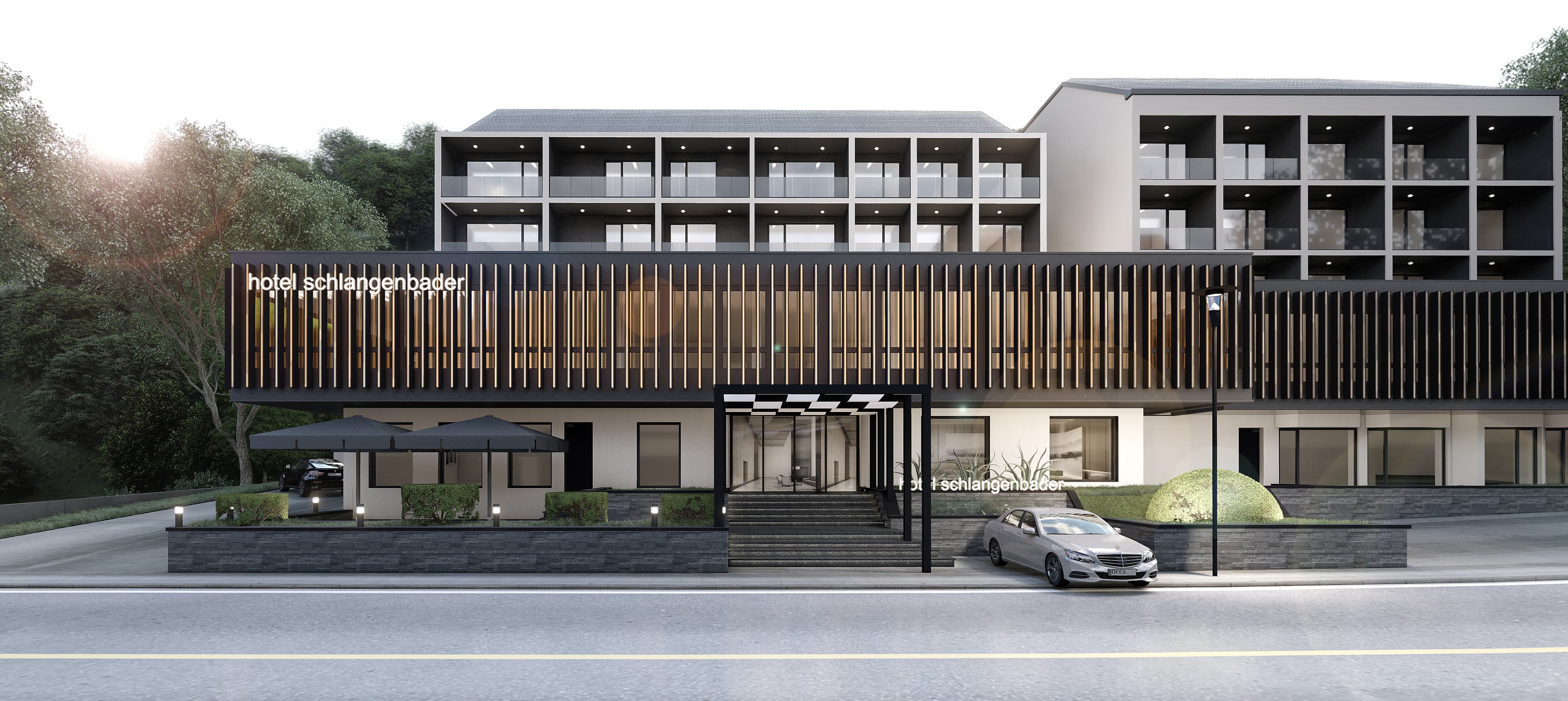
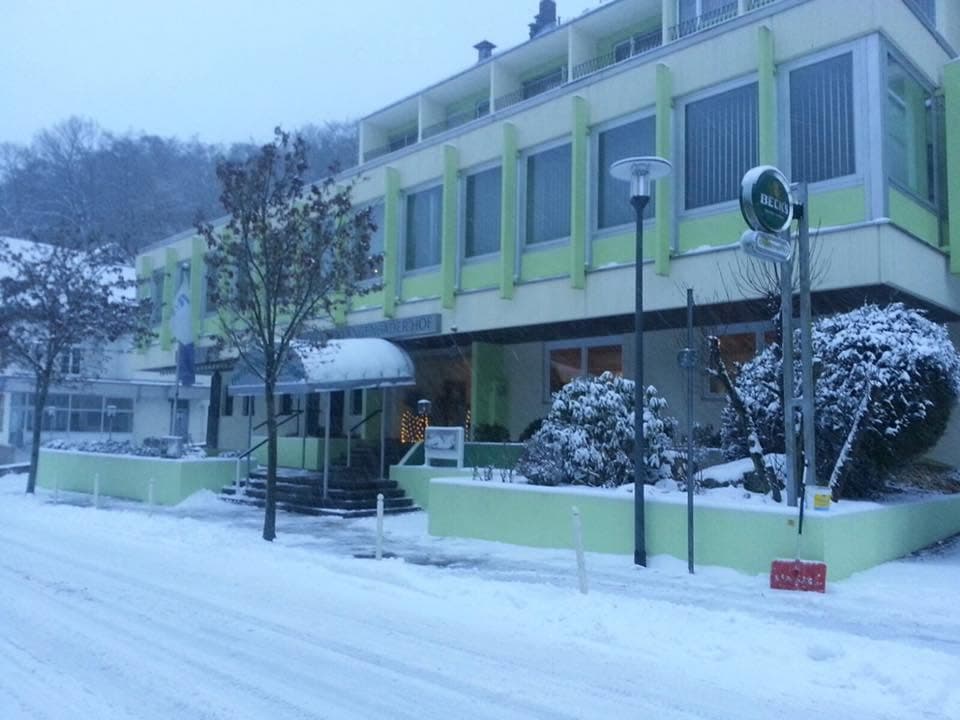
The restored facade preserves the original Wilhelmine character.

The facade restoration demanded a forensic approach — each stucco detail was documented, repaired, or faithfully replicated. Behind the preserved exterior, however, the structural systems are entirely contemporary: seismic upgrades, thermal insulation, and new mechanical cores sit invisibly within the historic shell.

The restored facade preserves the original Wilhelmine character.

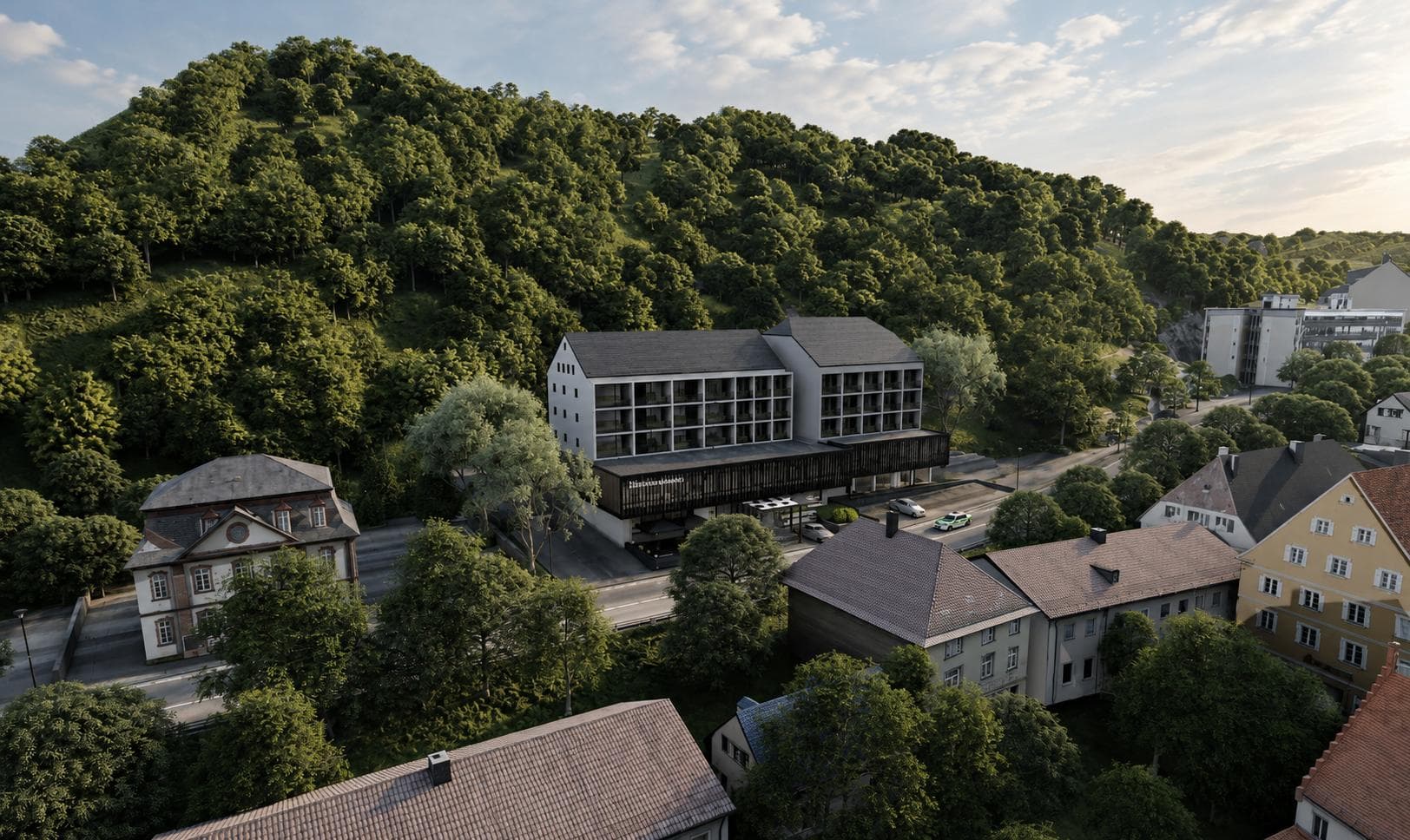
An aerial view reveals how the hotel sits within the forested hillside of Schlangenbad.

From above, the hotel's relationship with its setting becomes clear. The building's massing steps down the slope, its pitched rooflines echoing the traditional architecture of the surrounding village while its gridded facades and dark timber podium signal a distinctly contemporary programme. Dense forest rises behind, reinforcing the spa town's promise of retreat and nature.

An aerial view reveals how the hotel sits within the forested hillside of Schlangenbad.

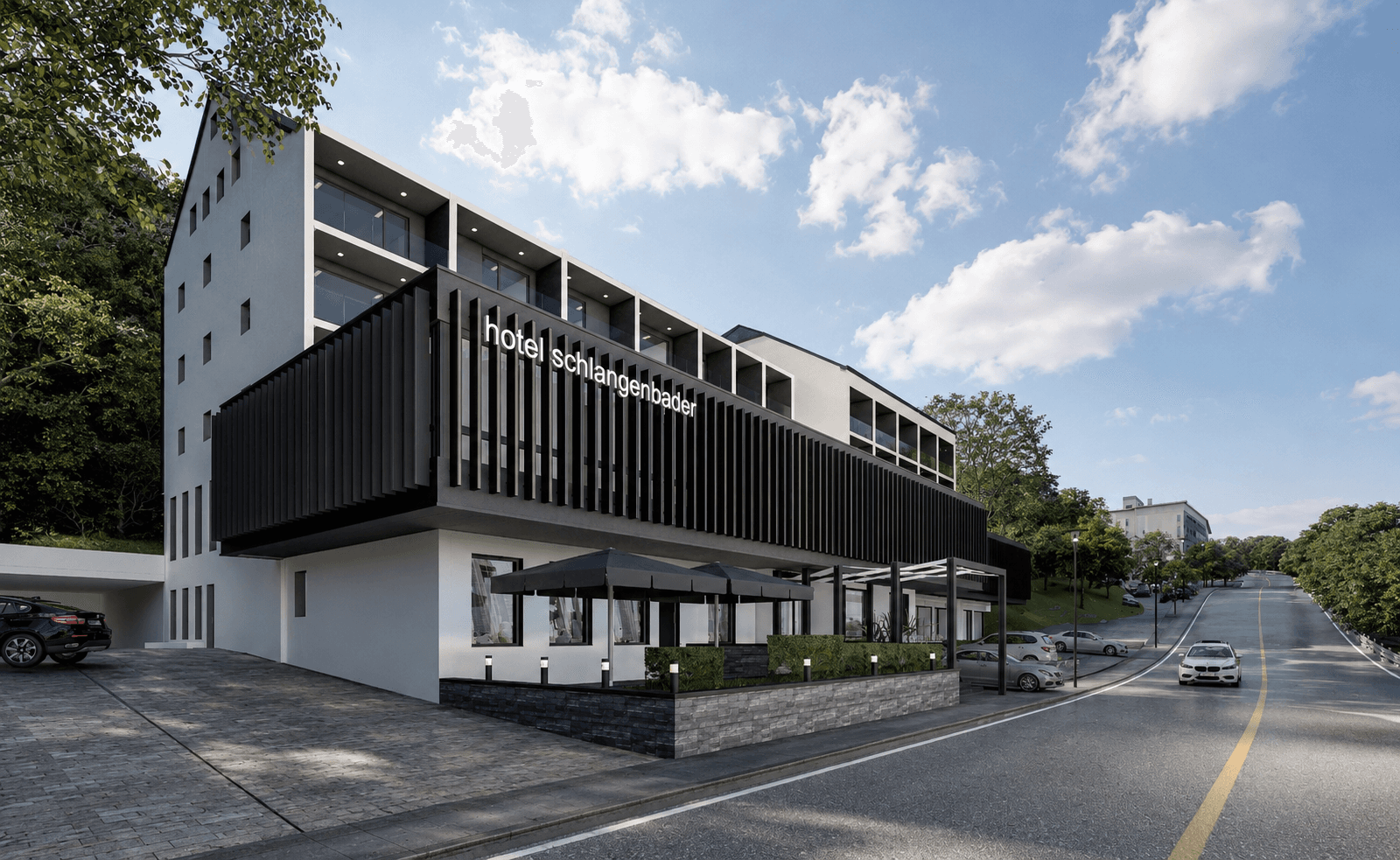
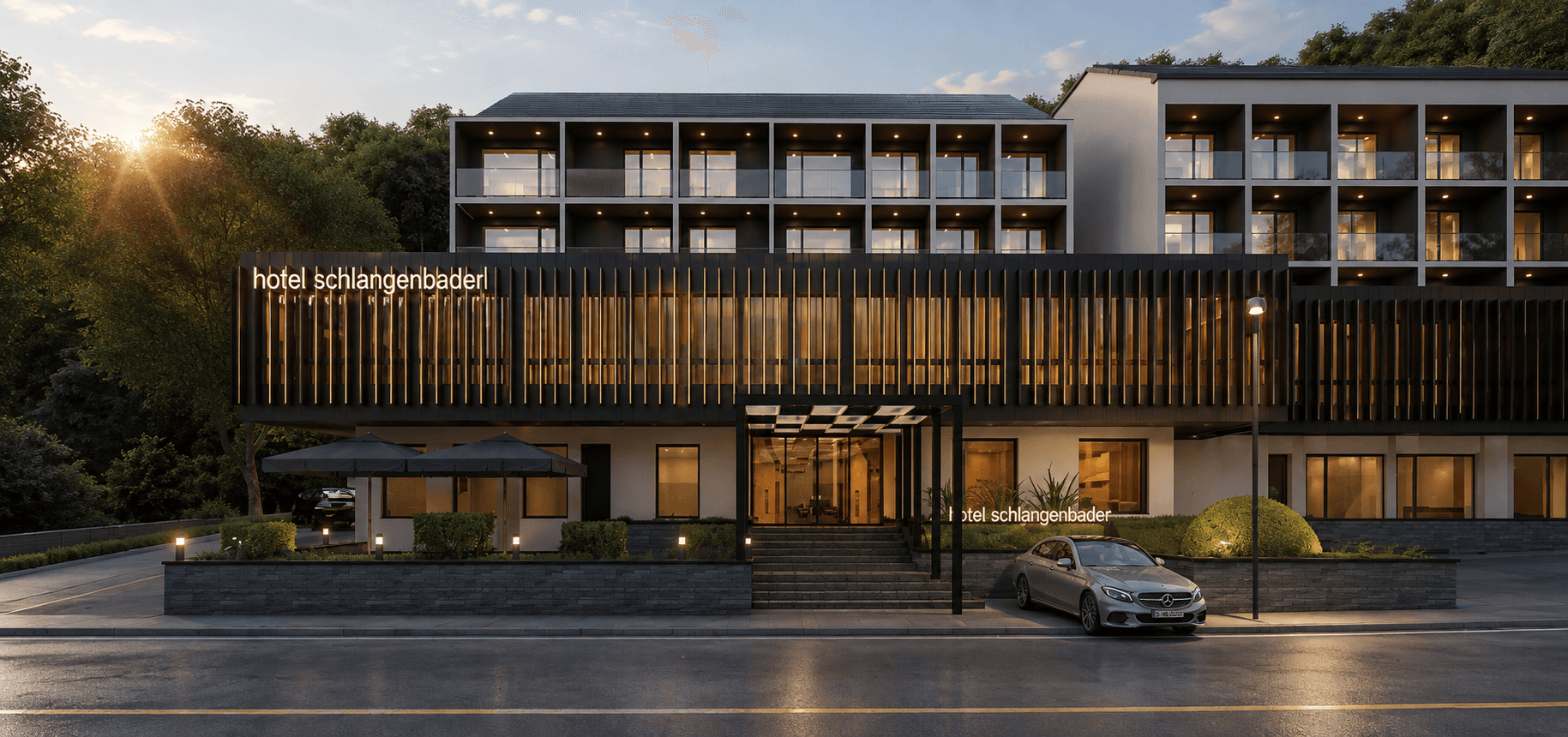
The street-level approach highlights the interplay of dark timber slats and white rendered volumes.

At street level, the entrance composition comes into focus. Vertical timber slats define the ground-floor podium, creating a warm threshold between the public road and the hotel interior. The cantilevered upper floors in white render hover above, their deep window recesses providing shade and privacy for guest rooms. The hotel's name, set in a restrained sans-serif, runs along the dark timber band — understated branding that lets the architecture speak for itself.

The street-level approach highlights the interplay of dark timber slats and white rendered volumes.

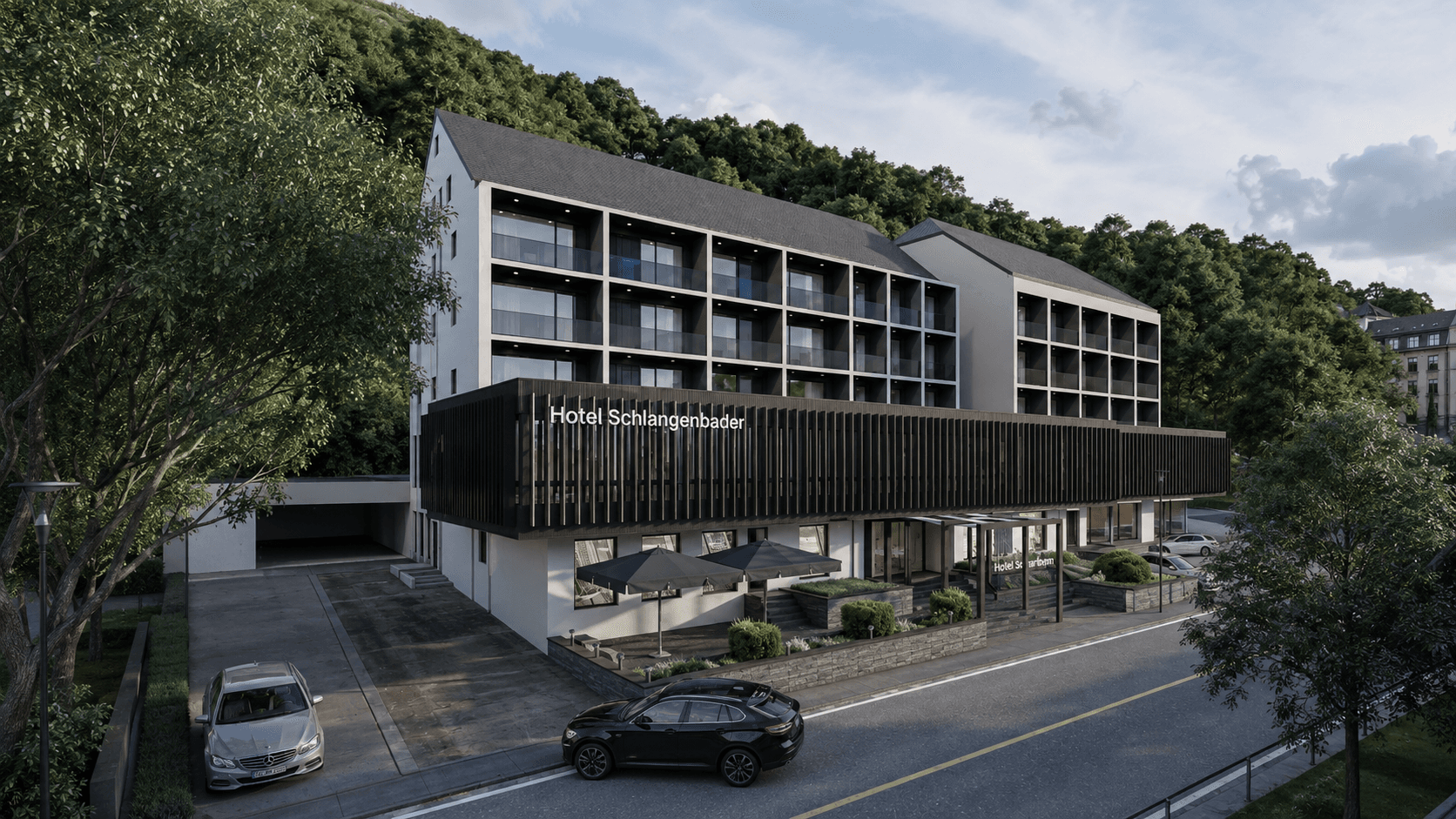
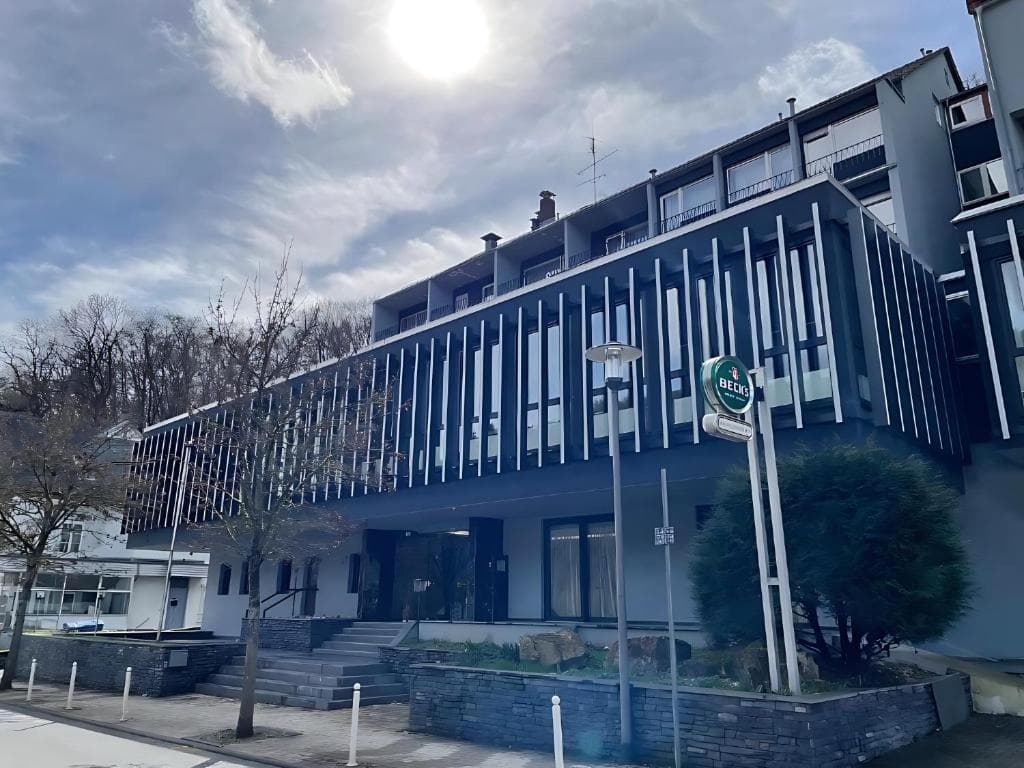
The building's pitched rooflines echo the village vernacular while its facades assert a modern identity.

Seen from the elevated corner, the full building volume reveals its dual nature. The upper floors present a rhythmic grid of deep-set openings in white render — a contemporary reading of the traditional Taunus guest house. Below, the dark timber-slat podium anchors the building to the ground and provides a sheltered outdoor terrace for the restaurant. Mature trees along the street edge soften the transition between architecture and the wooded hillside beyond.

The building's pitched rooflines echo the village vernacular while its facades assert a modern identity.

Back to Architecture