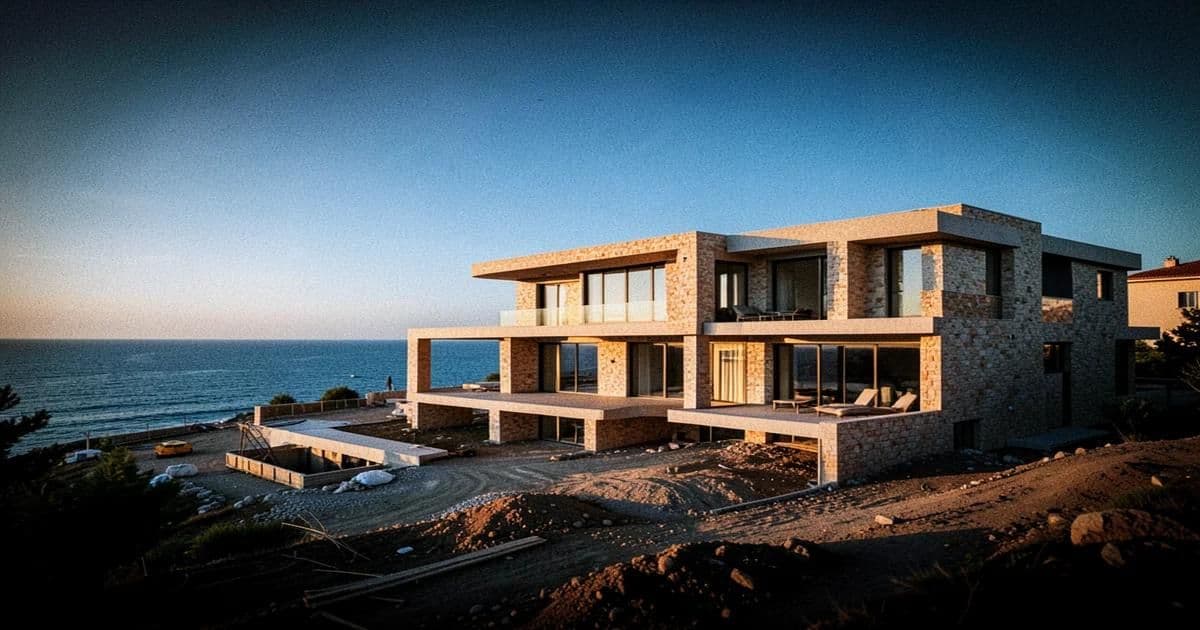
Building a Villa in Turkey: The Complete Guide for Foreign Buyers
Building a villa in Turkey is one of the smartest moves a foreign buyer can make right now — the combination of affordable land, world-class craftsmanship, and a climate that practically begs for open-plan living is hard to beat anywhere in Europe. But the process has real complexity, and getting it right means understanding Turkish property law, local construction practices, and the design possibilities that this landscape uniquely offers.
Why Turkey Is a Top Destination for Villa Construction
Turkey sits at a crossroads — literally and figuratively. The country bridges European design sensibility with Mediterranean warmth, and building costs here run well below comparable projects in Spain, Greece, or southern France.
Beyond cost, there's the lifestyle factor. Turkey's Aegean and Mediterranean coasts offer 300+ days of sunshine, and regions like Bodrum, Fethiye, Kalkan, and Antalya have become magnets for international buyers seeking custom-built homes. The government actively encourages foreign property investment with streamlined residency permits and a deep bench of experienced architects and contractors.
Practical takeaway: Start by shortlisting your preferred region based on climate, accessibility, and lifestyle priorities.
Legal Requirements for Foreign Buyers
Foreigners from most nationalities can buy property and land in Turkey — but there are specific rules you need to know before signing anything.
Turkish law permits foreign nationals to purchase up to 30 hectares of real estate. However, you cannot buy land in military zones or certain restricted areas near borders and security installations.
The process requires obtaining a tax identification number (vergi numarası), opening a Turkish bank account, and getting an official property valuation from a licensed appraiser. All documents go through the Land Registry Office (Tapu ve Kadastro), where the title deed transfer happens.
Key legal steps:
- Hire a bilingual property lawyer — not optional, essential
- Verify the land's zoning status (imar durumu) at the local municipality
- Confirm there are no encumbrances, liens, or disputes on the title
- Obtain a military clearance certificate if required for the plot's location
- Complete the title deed transfer at the Land Registry
One critical detail: the zoning plan dictates what you can build. A plot might be beautiful, but if it's zoned agricultural or falls within a conservation area, your villa project could be dead on arrival. For a deeper dive into the full land acquisition process, read our guide on buying land and building in Turkey as a foreigner.
Practical takeaway: Never purchase land without confirming its zoning status and getting a clean title report from a Turkish property lawyer. This single step prevents the most common — and most expensive — mistakes.
How to Choose the Right Land
Finding the right plot is arguably the most important decision in the entire process. The land shapes everything — your views, your floor plan, your construction costs, and your daily life in the home.
Start by defining your non-negotiables. Sea views? Walking distance to a village? Total privacy? Each priority narrows the search in useful ways.
Factors to evaluate before purchasing land:
- Zoning and building permissions — Can you actually build what you want here?
- Infrastructure access — Is there electricity, water, sewage, and road access?
- Topography and soil quality — Steep slopes or rocky ground increase foundation costs significantly
- Orientation — South-facing plots maximize natural light and views in the Aegean and Mediterranean regions
- Proximity to amenities — Hospitals, airports, markets, and restaurants matter for long-term livability
- Neighborhood trajectory — Is the area developing thoughtfully, or is unchecked construction creeping in?
Coastal plots in popular areas like Bodrum, Kas, and Kalkan command premium prices, but moving just 10–15 minutes inland can cut land costs dramatically while still offering stunning views.
Practical takeaway: Visit the land in person, at different times of day. What looks perfect on a sunny afternoon might have drainage problems in winter or noise issues you didn't expect.
The Design Process: From Vision to Blueprint
This is where your villa starts to take shape — and where working with the right architect makes all the difference.
A good design process begins with a detailed brief. You'll discuss how you want to live in this house — how many bedrooms, whether you entertain, indoor-outdoor flow, a pool, a guest house, a home office with a view.
From there, the architect develops concept sketches, then detailed architectural drawings, and finally full construction documents that contractors can build from.
Typical design phases:
- Site analysis — Understanding the land's contours, sun path, wind patterns, and view corridors
- Concept design — Initial floor plans, massing studies, and material palette
- Schematic design — Refined layouts with structural logic, MEP (mechanical, electrical, plumbing) routing
- Detailed design — Full construction drawings, material specifications, and cost estimates
- Interior design integration — Finishes, fixtures, built-in furniture, and lighting design
Turkey's architectural landscape has evolved enormously. Contemporary Turkish architects blend Mediterranean modern architecture — natural stone, exposed concrete, timber screens — with smart environmental strategies like cross-ventilation, thermal mass, and passive solar design.
Practical takeaway: Invest time in the design phase. Every hour spent on thorough planning saves multiples during construction. Rush the design, and you'll pay for it in change orders and regret.
Navigating Construction Permits
The permit process in Turkey is bureaucratic but predictable. Once you understand the steps, it's a matter of patience and having the right documentation.
Your architect prepares and submits the architectural project (mimari proje) to the local municipality. This project must comply with the area's zoning plan (imar planı) and building code (yapı yönetmeliği).
The permit timeline typically looks like this:
- Zoning conformity review — Municipality checks your project against local building regulations (2–4 weeks)
- Technical review — Structural, electrical, and mechanical engineering plans are evaluated (2–4 weeks)
- Building permit issuance (yapı ruhsatı) — Formal approval to begin construction
- Construction phase inspections — Municipal inspectors check foundations, framing, and systems at key milestones
- Occupancy permit (yapı kullanma izni) — Final approval confirming the building is safe and compliant
In earthquake-prone regions — which includes most of western Turkey — structural engineering requirements are strict, and rightly so. Your architect and structural engineer must design to current seismic codes, which add cost but are absolutely non-negotiable for safety. We cover what this means in practice in our guide to earthquake resistant building design in Turkey.
Practical takeaway: Budget 2–3 months for the permit process before construction begins. Your architect should handle all submissions, but stay informed about each stage so you're not caught off guard by delays. If you're building in Istanbul specifically, our step-by-step guide to construction permits in Istanbul covers the process in much greater detail.
What Does It Cost to Build a Villa in Turkey?
Cost is the question everyone asks first, and the honest answer is: it depends enormously on your choices.
Construction costs in Turkey vary with the quality of finishes, the complexity of the design, and location. A straightforward 200 m² villa with mid-range finishes will land in a very different place than a 400 m² architect-designed home with imported stone, smart home systems, and an infinity pool.
Major cost categories to budget for:
- Land purchase — Varies wildly by region, from modest inland plots to a premium for prime coastal spots
- Design and engineering fees — These scale with the project's size and complexity
- Construction — The largest single expense; includes structure, finishes, and systems
- Landscaping and pool — Often underestimated relative to the main build
- Permits, taxes, and legal fees — A smaller slice of the total project, but one you must account for
- Furniture and fit-out — Depends entirely on taste, but budget separately for this
A common mistake is fixating on the per-square-meter construction figure while ignoring soft costs — design fees, permits, utility connections, landscaping, and furnishing. These can add meaningfully on top of the raw build number.
Practical takeaway: Get a detailed cost estimate covering every category, not just the build. Then add a sensible contingency buffer on top.
Realistic Timelines: How Long Does It Take?
From the moment you decide to build to the day you move in, expect a timeline of 12 to 20 months for a typical villa project.
Here's how the time typically breaks down:
- Land search and purchase — 1–3 months (longer if you're selective, which you should be)
- Design development — 2–4 months for complete architectural and engineering drawings
- Permit approvals — 2–3 months, sometimes faster in smaller municipalities
- Construction — 8–12 months for a standard villa; 12–16 months for larger or more complex projects
- Final inspections and move-in — 1–2 months for occupancy permit and punch list items
Weather matters. Construction in coastal Turkey slows during heavy rain periods (typically December–February). Smart scheduling starts foundation work in spring so the structure is enclosed before winter.
Practical takeaway: Lock in all major design decisions before breaking ground. The construction phase should be about execution, not redesign.
Why Working with a Local Architect Matters
You could theoretically hire an architect from anywhere and have a local contractor build from their plans. In practice, this almost never works well.
A local architect brings irreplaceable knowledge:
- Climate-responsive design — They understand how the Aegean wind, summer heat, and winter rains affect building performance
- Material sourcing — They know which local stones, timbers, and suppliers deliver the best quality for the price
- Contractor relationships — They can recommend reliable teams and catch shoddy work early
- Regulatory navigation — They speak the language (literally and bureaucratically) and know how to move permits through the system
At DEEX Studio, we've guided dozens of international clients through exactly this process — from first site visit to handing over the keys. Our approach combines contemporary architectural design with deep knowledge of Turkey's construction landscape.
Practical takeaway: Choose an architect with a strong portfolio of completed projects in your target region, verified references from international clients, and a communication style that works for you. This single decision shapes every other outcome.
Common Mistakes Foreign Buyers Make
After years of working with international clients, we've seen the same mistakes repeat. Avoiding them saves time, money, and stress.
- Buying land without verifying zoning — The number one mistake. A gorgeous plot is worthless if you can't build on it.
- Skipping the lawyer — Turkish property law has nuances that even experienced buyers from other markets won't anticipate.
- Choosing the cheapest contractor — Low bids often mean cut corners, inferior materials, or a crew that disappears mid-project.
- Underestimating the budget — Always keep a comfortable margin above your base estimate for contingencies.
- Managing construction remotely without representation — If you're not on-site regularly, you need an architect or project manager who is.
- Ignoring earthquake codes — Turkey is seismically active. Structural integrity isn't a place to save money.
- Making design changes during construction — Every change order costs more and takes longer than you think.
Practical takeaway: Build a team you trust — lawyer, architect, contractor — and lean on their local expertise. The clients who run into trouble are almost always the ones who tried to manage everything themselves from abroad.
Frequently Asked Questions
Can foreigners legally build a villa in Turkey? Yes. Citizens of most countries can buy land and build residential property in Turkey. There are restrictions on purchasing in military zones and near borders, but your lawyer will verify eligibility before any transaction.
Do I need a residency permit to build in Turkey? No. You can purchase land and build without a residency permit. However, owning property valued above a certain threshold can qualify you for a short-term residency permit, which many foreign homeowners find convenient.
What determines the cost of building a 200 m² villa? Total project cost (excluding land) depends on location, complexity, and material choices. Premium finishes and features like pools push the figure higher, so the best path to a realistic number is a scope-based estimate built around your specific design.
Can I get a mortgage in Turkey as a foreigner? Some Turkish banks offer mortgages to foreign nationals, but terms are less favorable than for citizens. Most foreign buyers finance through savings or home-country lending.
How long does the entire process take from land purchase to move-in? Plan for 12–20 months total. The design and permit phases take 4–7 months, and construction runs 8–12 months for a standard villa.
What happens if I can't be in Turkey during construction? Your architect or project manager becomes your eyes and ears on the ground. At DEEX Studio, we provide regular photo and video updates, handle contractor coordination, and ensure quality control so clients abroad stay fully informed.
Is it safe to build in earthquake-prone areas? Yes — provided your building is designed and constructed to current Turkish seismic codes, which are among the strictest in the region. A competent structural engineer and quality construction are essential.
What are the ongoing costs of owning a villa in Turkey? Annual property tax is relatively low as a share of declared value. Budget additionally for utilities, maintenance, garden care, pool upkeep, and property management if you're not living there year-round. Ongoing running costs vary with the size of the property and the level of service you choose.
Building a villa in Turkey is a significant investment that rewards careful planning. The right land, the right architect, and the right team turn what could be overwhelming into one of the most rewarding projects of your life.
If you're considering building in Turkey and want expert guidance from the very first step, get in touch with DEEX Studio. We'd love to hear about your vision.
Get in Touch
Let's Bring Your Project to Life
Planning a new project? Let's realize your vision together.